
CSILab presents 13 scientific works at BRACIS 2026
Between October 19 and 22, 2026, CSILab students and faculty members presented 13 papers at BRACIS 2026 and its co-located events, including ENIAC and KDMiLe.
13 works presentedBRACIS 2026
Federal University of Ouro Preto · DECOM
Pushing the frontiers of artificial intelligence, computer vision, machine learning and data science — from theory to real‑world application.
312+
Scientific Publications
13
Professors & Researchers
5
Industry Partnerships
50+
Alumni
01About the Lab
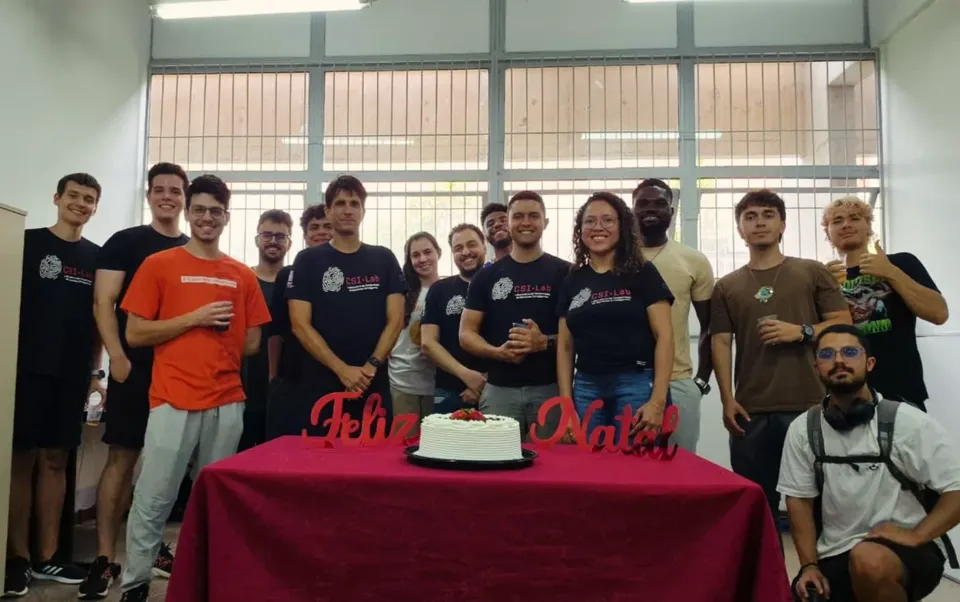
CSI Lab is the Intelligent Systems Computing Laboratory at the Federal University of Ouro Preto (UFOP), affiliated with the Department of Computer Science (DECOM/ICEB).
Our mission is to advance artificial intelligence, machine learning, computer vision, pattern recognition and data science — combining academic excellence with practical applications of social and industrial impact.
We develop models and systems applied to healthcare, finance, environment and language — with publications in Springer, IEEE, SBC and ScienceDirect.
We collaborate with companies such as EFI Bank, CGU, Embrapii and BDMG on R&D projects, transferring knowledge to society.
16+ Years of Research
02Research Themes
From deep learning to biometric recognition — our research groups cover the main frontiers of intelligent computing.
AI models applied to high-complexity problems in healthcare, finance, language and environmental perception.
Visual pattern recognition, image classification, deepfake detection and biometric identification.
Deep neural networks, transfer learning, self-supervised learning and efficient architectures (NAS).
Language models for Portuguese, toxic text classification, speech recognition and prompt optimization.
Credit risk analysis, fraud detection, churn prediction and epidemiological time series.
Spatial cluster detection, COVID-19 modeling with GNN and urban mobility, epidemiological surveillance.
ECG classification, arrhythmia detection, heartbeat segmentation and remote cardiac signals via video (rPPG).
Evolutionary algorithms, community detection in social networks and Pareto solution dispersion/concentration optimization.
03Scientific Output
Our work in international journals and conferences, synced weekly with Google Scholar.
1,119 citations
ECG-based heartbeat classification for arrhythmia detection: A survey (opens in a new tab)
606 citations
422 citations
312 papers 6,164 citations
Google Scholar · updated October 19, 2026
View All Publications04Updates
Follow the lab's achievements, conference presentations and awards.
Between October 19 and 22, 2026, CSILab students and faculty members presented 13 papers at BRACIS 2026 and its co-located events, including ENIAC and KDMiLe.
13 works presentedBRACIS 2026
The lab was present at the IEEE Latin American Conference on Computational Intelligence with three works in spatial analysis, periocular biometrics and remote cardiac signals.
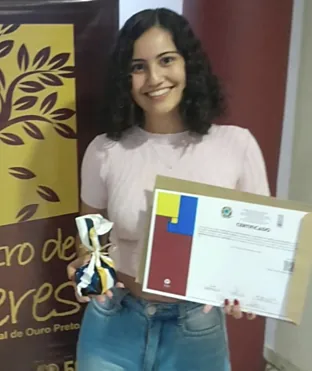
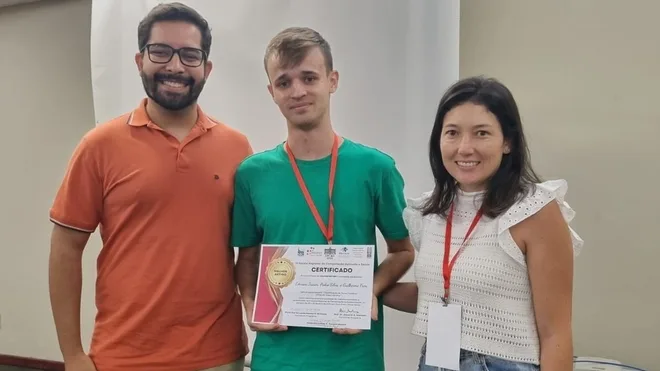
IX Regional School of Computing Applied to Health — best paper award given to a work advised by Prof. Eduardo Luz.
05Technology Transfer
Applied research projects with industrial and government partners.
AI for the Financial Sector
OngoingNLP Models for the Plataforma Brasil
Industrial AI
Data Science for Credit
Credit Risk
In developmentDevelopment of an algorithm for the detection, classification, and proposal of corrections for defects in stamping processes
CompletedDesenvolvimento de um sistema embarcado multicâmera e interface web para inspeção, detecção e classificação de pontos de solda em peças industriais utilizando Inteligência Artificial
CompletedWe welcome undergraduate, master's and PhD students, and we seek partnerships with companies and public institutions. Tell us about your research interests.